How to Host a Bachelorette or Bridal Shower Murder Mystery Party
Planning a bachelorette or a bridal shower means keeping several traditions happy at once. A MortalCase murder mystery party gives 8–20 guests a private role for 2.5–3 hours, and this guide shows you how to fit that around gifts, food, and photographs without either side losing. You'll leave knowing where the game belongs in the schedule, which decisions belong to the bride, and which jobs to hand to somebody else before the day arrives.
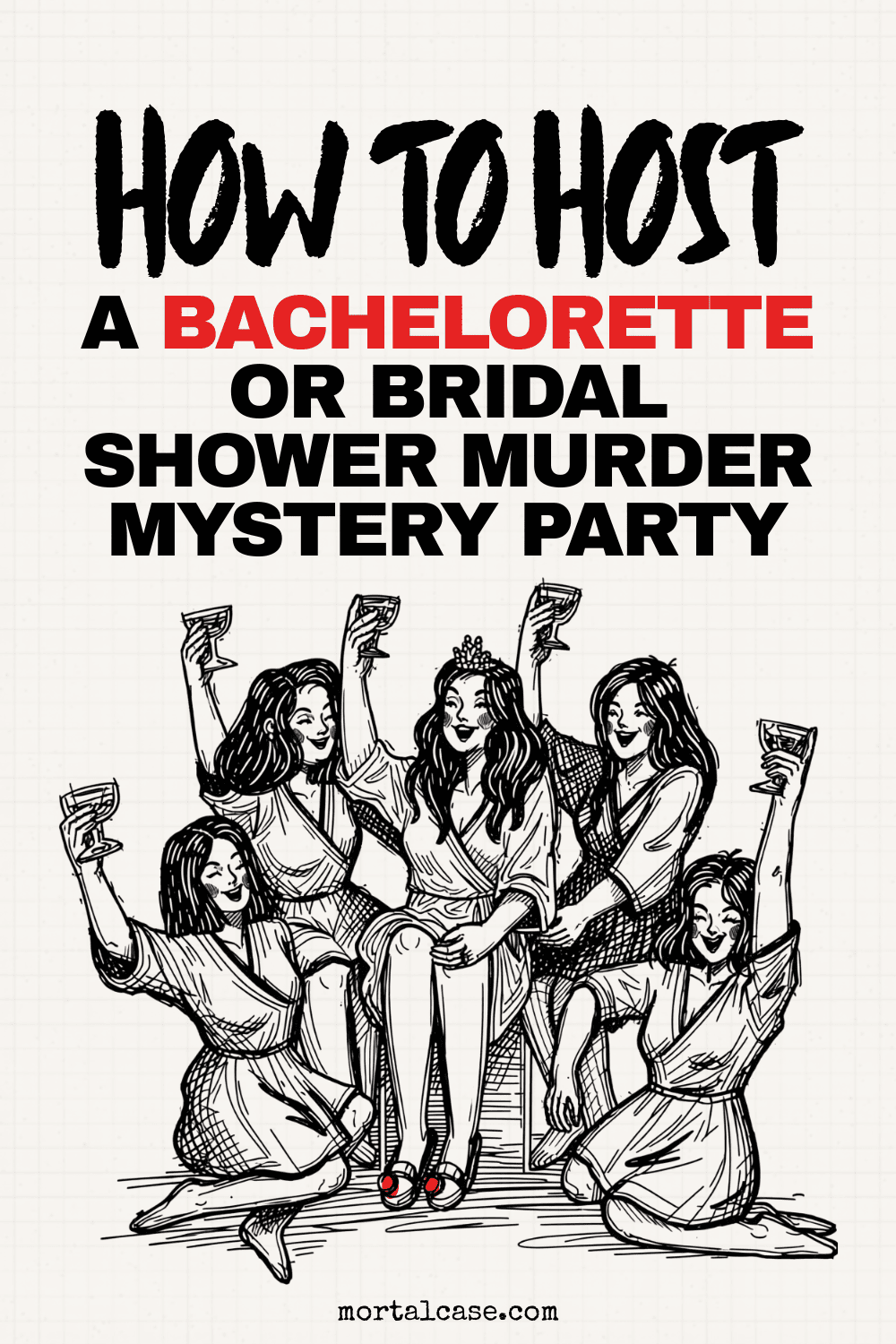
You said yes to planning the bachelorette or the shower, and the group chat is already full of ideas that don’t fit into the same afternoon. Gifts, photos, food, somebody’s cocktail plan. Something has to hold the middle of the event, and everything else has to arrange itself around that.
A MortalCase murder mystery party runs 2.5–3 hours for 8–20 players, which makes it big enough to be that center and contained enough to leave the wedding traditions their own moment. Protect that block, and the rest of the day stops competing with it.
The best version feels like a celebration with a mystery inside it. The weak version is a wedding checklist in costume. Start with the guest group and the bride’s preferences, then choose the theme, schedule, and extras that support them.
Choose the right event and guest list
A bachelorette night may welcome louder costumes, cocktails, and a later ending. A bridal shower may include several generations, daytime food, gifts, and a more relaxed room. Either can work, but the same plan shouldn’t be copied automatically.
Confirm that 8–20 guests want an interactive role. Every game has 8 required Primary Characters and 12 optional Secondary Characters. Reliable RSVPs matter because the Primary cast must be present. If the event has 40 drop-in guests or only 6 people who want to play, another activity may fit better.
Your yes list for a bachelorette or a shower is rarely a balanced room, and casting a game with an uneven male and female ratio answers the question that follows.
I build every game for 8 to 20, because below 8 the suspects run out before the evening does. That’s also why the 8 Primary Characters aren’t optional. A bridal party that shrinks to 6 on the day is better served by something else, and I’d rather you knew that while you can still change the plan.
The broader murder mystery planning checklist gives you the full path from guest list to game night.
Pick a theme the bride wants to inhabit
The occasion doesn’t require a wedding-themed mystery. A disco, casino, or speakeasy can give the group a clearer visual world and avoid making every joke about marriage.
- A 1970s disco murder mystery party suits bright outfits, dancing, and playful group photos.
- A casino night murder mystery party supports polished glamour and easy table décor.
- A 1920s speakeasy murder mystery party fits cocktails, vintage style, and a dramatic entrance.
A bride who’d rather skip a room full of pastel can take her group into the 1920’s Speakeasy Murder Mystery, where every guest has secrets to keep quiet about and the look comes from one dress and some borrowed jewelry.
Read the current product description and PG-13 guidance before choosing for a mixed-age shower. Only A Killer Disco Party has a Clean Game Kit.
Send character information early
Send the invitation first, then private Character Guides after guests confirm. Explain that the guide is private, the game uses freeplay rather than memorized scripts, and costumes can be simple. A clear deadline gives guests time to ask questions without filling the wedding party chat with spoilers.
Every guest gets a role of her own, and the Character Guide is written so nobody has to learn anything by heart. It holds her background, her Important Relationships, Things to Share, Secrets to Hide, and a Secret Task. A guest who reads hers a few days early plays a noticeably better first hour, so send it as soon as she confirms.
The guide to what to wear to a murder mystery party gives practical outfit levels. A color, accessory, or one recognizable detail is enough for a guest who doesn’t want a complete costume.
Do not assign the bride a role simply because it attracts the most attention. Ask whether she wants to lead conversations, solve quietly, host with you, or arrive as a guest with no practical job.
Build the schedule around one uninterrupted game block
Welcome guests, handle coats and drinks, and give everyone time to arrive before the opening. Once play begins, keep major traditions out of the investigation. A workable order is arrival, opening instructions, first play period, a planned food pause, continued investigation, final voting, the Reveal, awards, then gifts or open-ended celebration.
A grazing table works better than a formal meal that seats everyone away from the evidence. Label food, keep drinks away from printed clues, and choose items guests can handle while moving.
Whoever hosts can take a character too, since nobody in the room has read the ending. A maid of honor, sibling, or friend can run the timeline and investigate too. A second person can manage gifts, food, or venue questions.
Decorate the social zones instead of every surface
Give the room a strong entrance, one evidence area, a drink or food station, and a photo spot. Those zones help movement and photographs without burying clues under wedding décor. Repeat 2 or 3 colors and a few theme-specific props instead of buying a separate object for each table.
Place the photo area where guests naturally pass after they settle into character. The guide to murder mystery photo booth ideas explains how to make it part of the room rather than an obligation.
One customer put it this way.
“This was our first murder mystery and it was so well organized. I had questions throughout and she answered promptly!”
Organization is especially valuable when the host is also coordinating a wedding event.
Give the ending its own moment
Collect private votes before the Reveal so confident guests don’t decide for everyone. Read the final sequence as directed, present any awards, and take one group photo while costumes and reactions are still fresh.
Move gifts, toasts, dancing, or the next venue after the solution. That separation gives both parts of the celebration room to land. If the bride wants a loose drop-in shower with continuous gift opening, choose a shorter mystery activity instead of forcing a full game into fragments.
Aim for 1 shared experience the bride can enjoy with the people she chose to invite. Filling every hour works against that.
A planning timeline that protects the celebration
3 to 6 weeks before the event, confirm the player count, purchase the game, assign characters, and send private guides. 2 weeks before, check RSVPs, print or organize the files, decide where evidence and food will live, and ask the bride about any comfort concerns. During the final week, test the timeline, prepare the protected Reveal, label materials, and confirm the co-host’s job.
The printing is a whole evening, not a job for the afternoon of the party, so put it in that 2 week window with the RSVPs and the food. You’ll find the games in my Etsy shop, and everything arrives as files you can print at your own pace.
On the day, set up the evidence before decorating around it. Put gifts and wedding supplies in a separate zone so guests don’t mix private envelopes, cards, and clues. Keep the bride’s practical responsibilities light unless she explicitly wants to host.
After the Reveal, save time for photographs, awards, gifts, or a toast. A planned ending feels generous because no one has to choose between hearing the solution and participating in a wedding tradition.
Budget for the game, printing, food, and 1 or 2 visible atmosphere choices before buying favors. Personalized objects can be lovely, but they don’t help the investigation if the evidence is hard to find or the schedule is overcrowded. The most useful keepsakes are often the photographs, awards, and stories guests create while playing.
Tell vendors and the venue that guests will move and talk. Confirm noise limits, table access, cleanup time, and whether outside food or decorations are allowed. A clear venue plan protects the wedding party from solving logistical problems during the mystery.
Keep wedding-sensitive topics outside improvised jokes unless the bride has welcomed them. The fictional characters can be suspicious, ambitious, and dramatic without guests making real accusations about partners, family, money, or the wedding. Share that boundary in the welcome if the group enjoys teasing. A safe social frame lets people play boldly because they know the real relationships are protected.
Start with the game, then plan the celebration
Have a look through my murder mystery games for 8–20 players and pick the world your bride would want to spend an evening in. Once the theme is settled, the invitations, costumes, and schedule mostly decide themselves.