PLAN & HOST WITH CONFIDENCE
Planning a murder mystery party should feel exciting, not like you accidentally volunteered to produce a stage show.
Start here for practical help with prep, casting, printing, evidence, guest communication, and running the night with confidence.

The clock is the one part of hosting that won't negotiate. Here's where the time goes before anyone is murdered, what to cut first, what to never cut, and how to hand a lively room more investigation without pushing a MortalCase Reveal past the point where people start checking their phones. You'll also get a line for the invitation that tells guests when the game ends and when the evening does, so nobody leaves before the answer.
-
Hosting a MortalCase game for 15 to 20 people is a room problem before it's a casting problem. Once that many guests arrive, the evening depends on how many conversations can happen at once, whether the evidence is somewhere everyone can reach, and how fast you can absorb the cancellations that turn up on the day. Here's how to set all 3 of those up before the doorbell goes, and what to say in the first 5 minutes.
-
The week before a MortalCase party is where guests decide how much they'll join in, and most of that is settled by 3 messages. Here's what belongs in the invitation, what to say when the Character Guides go out, and what to keep out of the group chat. You'll also get the 5 lines that work as pre-party messages, and a last reminder that gets everyone through the door on time, with nothing new to prepare.
-
You can sort and release every piece of evidence while staying as much in the dark as your guests. The whole sort runs on one question, which event releases this, so you never have to ask what a clue proves. Give the released clues one public table, keep the protected documents closed, and know what to do when the room walks past something important. You finish with a setup that protects the Reveal and lets you investigate alongside your guests.
-
Your guests decide whether to come based on what the invitation tells them, long before they understand how the game works. Send the date, location, 2.5–3 hour game window, RSVP deadline, costume expectations, and a simple reassurance that acting skills are optional. This guide includes a ready-to-adapt invitation, a follow-up schedule, character-assignment timing, and wording for late replies. It will help you secure 8 dependable Primary players while keeping the message intriguing, clear, and free of spoilers.
-
Most of the stress of hosting comes from doing the right job at the wrong moment. Printing on the day. Deciding the guest list after the invitations have gone out. A MortalCase game takes 2.5–3 hours to play, and this guide breaks the preparation around it into jobs small enough to finish on a weeknight. By the time your friends ring the doorbell, the only one left is opening the door.
-
You're free to move around in freeplay: you choose whom to question, you decide what to reveal, and the room is never waiting for your turn. This guide gets a first-time guest moving in 5 minutes. It gives you your first opening line, the 3 exits that end a stalled conversation without awkwardness, the rule for what stays private, and a 60-second reset for the moment you realise you have no idea what to do next.
-
Preparing your first MortalCase murder mystery takes an evening, not a fortnight, once you do things in the right order. Read the Host Guide once. Put the 2 spoiler documents in a folder you don't open. Cast the 8 required roles, send each guest their own private guide, print the evidence and skip printing most of the rest. Then plan the first 10 minutes, which is the part that decides how the night feels.
-
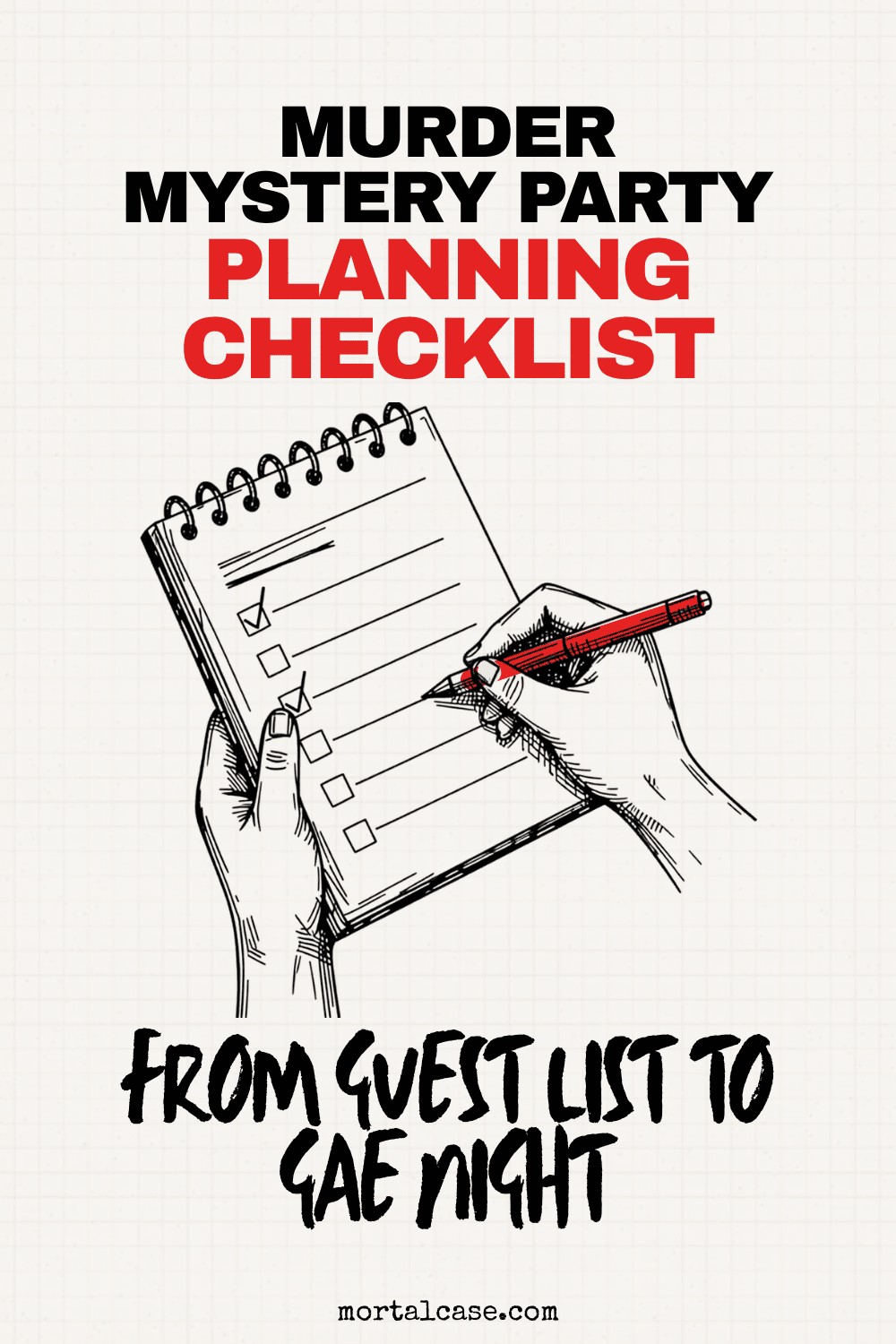
Work down one list and your MortalCase party stops turning into a scramble the day before. You'll know what to settle before you pick a date, which 8 roles have to be cast first, how early the private guides need to go out, and what deserves paper instead of a screen. The small jobs get done while they're still small, and the last day stays free.
-
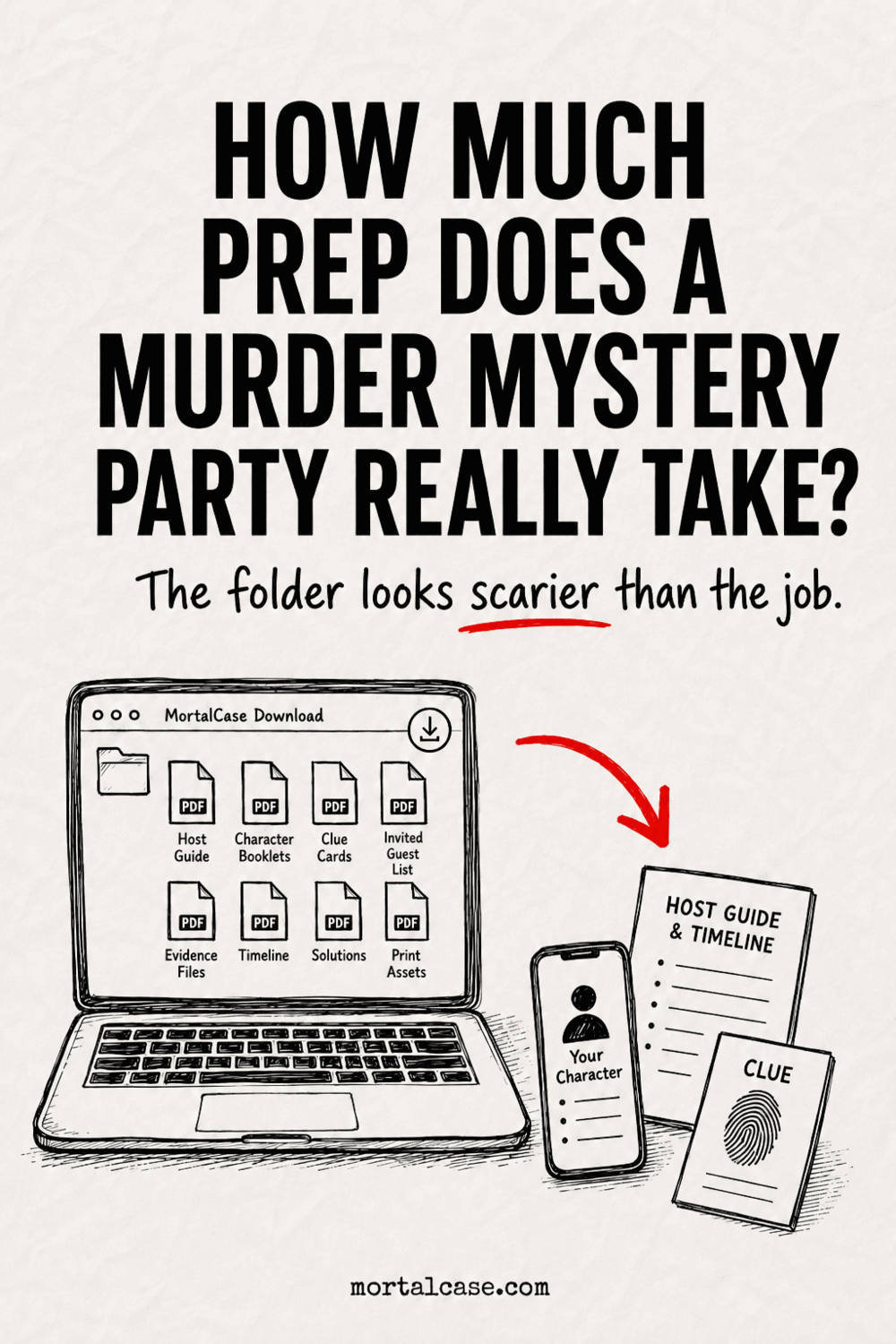
Opening a MortalCase game for the first time can make a perfectly capable host wonder whether she has accidentally volunteered to run a small theater company. The folder contains a lot because the host, the guests, and the final Reveal don't all need the same information. The actual job is much smaller: understand the Host Guide, cast your guests, send their private files, then choose and organize the materials that suit your party. The timeline keeps the evening moving. Nothing needs to be memorized.